Thursday, January 2, 2014

Welcome to Literature through the Lens of Brain Science!


Happy New Year!!!!

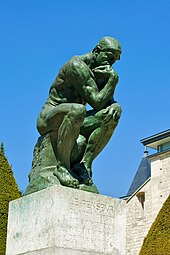
Re-adjust your thinking caps and consider why thinking about thinking (meta-cognition) is so important. To do so, we will analyze the term "meta-cognition" and interpret a quote, applying it to what we’ve learned so far about our brains and our minds.

First, do you consider yourself primarily a thinking or a feeling person? Discuss with a partner and then watch this video:


Based on what you know already about the brain, would you say that Maira Kalman is really emptying her brain when she walks down the street as she claims? She says she is feeling, but isn’t she also thinking about her feelings? This is getting way too complicated, right?

Believe it or not, you’ve been thinking about thinking and feelings throughout this course. In this unit, you will focus in particular on interpreting literature through the critical lens of brain science. In other words, you will be thinking about thinking as it is portrayed in literature.

Thinking about thinking is called metacognition .
Watch this video for a visual definition of this important term.

Step 1: There are four open-ended essential questions guiding us through this unit. Think about these questions as you continue to learn more about the mind and brain. The four questions are:

  • How does thinking about thinking (meta-cognition) help us better understand ourselves?
  • How does understanding the human brain help us gain a better understanding of human nature?
  • What is the relationship between thinking and identity?
  • How is the human mind different from the animal mind? 
Choose one of the essential questions and answer it as best you can in complete sentences. Remember, there are no wrong answers here. (The only wrong answer is NO answer!)

Step 2: Interpret this quote by philosopher John Locke, say whether you agree or disagree and explain why:

The understanding, like the eye, whilst it makes us see and perceive all other things, takes no notice of itself: and it requires art and pains to set it at a distance and make it its own object....” 

Step 3: Post your answer to your selected essential question and your interpretation of the John Locke quote on your blog. But, before you submit, share your answers with a partner or your class.

Further Reflection (and extra credit): Philosopher Rene Descartes is famous for saying, “I think, therefore I am.” How do you interpret this quote?

Thursday, December 19, 2013

Further considerations for your argument essay


Aim: How do we introduce and outline our argument essay?

Quick Write:  Should Ethan Couch have gotten jail time? Why do you think this topic is important?

Although the question for your argument essay might seem simple, it is not. This has nothing to do with the facts and evidence in the news story beyond whether you think Ethan Couch should have gone to jail or not. You should support your opinion on this question with scientific facts, evidence, and studies about the teenage brain that you learned from the articles and video we discussed in class and any other research you have conducted independently.

We've read a couple good examples of argument essays. "A Brain Too Young for Good Judgement" offers the perfect model. It gives just enough context (background information) on the legal case so that we can form opinions. Then it goes on to support the claim that the shooter was too young to exercise good judgment, using scientific facts and evidence. It also dismisses a very subtle counterclaim in the concluding paragraph. Can you find it?

You might use this model for your intro if you are stuck.

Four innocent people in Texas are dead as the result of a drunken joy-ride, but the 16-year old driver behind the wheel of the car will not serve one single day in jail. People may be outraged that Ethan Couch's attorneys successfully argued that he was the victim of his family's wealth because he was raised in an environment too rich to be bothered with teaching him the consequences of reckless actions. Still, rich or poor, the teenage brain is different from the adult brain. Whether it's different enough to avoid jail time for such a horrendous action is another question. Based on what I've learned from my readings and research, I believe Ethan Couch (should have/ should not have) received jail time for the killings.

Use this interactive persuasion map to help you complete your outline. It's also a page on this blog. Note: The persuasion map does not provide an option for counterclaims. You'll have to add that paragraph yourself.

Guidelines

Write a short (750 words) essay in which you:
  •  Explain what's at stake. Why is this question important? (Today's Quick Write)
  •  Develop and state your own position.
  •  Defend your position with a range of different types of evidence, facts, and information from the    articles and video we discussed in class.
  •  Include any other research that you may have conducted independently.
  •  ADDRESS AND RESPOND TO COUNTERCLAIMS TO YOUR POSITION.
  •  Draw your own conclusions.


Here is the rubric by which it will be graded. You will be expected to complete final drafts, including peer editing, by Friday. The essay should be uploaded to Google Drive and linked to your blog. Essays also should be emailed to msbecker4@gmail.com


Monday, December 16, 2013

Argument Essay Challenge

Aim: How do we evaluate which position to take in an argument?

Quick Write: How do you personally exercise endogenous control?

Congratulations, Brainiacs! You are ready to take on the next challenge in this course.
Your mission is to write an argument essay based on this article and video:
"Teen Who Killed 4 Avoids Jail"

Question: Do you believe Ethan Couch should have gone to jail for his crime?


Take a position and support it with evidence from the facts and studies about the developing teenage brain that we discussed in class. 

Guidelines

Write a short (750 words) essay in which you:
  •  Explain what's at stake. Why is this question important?
  •  Develop and state your own position.
  •  Defend your position with a range of different types of evidence, facts, and information from the    articles and video we discussed in class.
  •  Include any other research that you may have conducted independently.
  •  ADDRESS AND RESPOND TO COUNTERCLAIMS TO YOUR POSITION.
  •  Draw your own conclusions.

Here is the rubric by which it will be graded. You will be expected to complete final drafts, including peer editing, by Friday. The essay should be uploaded to Google Drive and linked to your blog. Essays also should be emailed to msbecker4@gmail.com


Friday, December 13, 2013

The Teen Brain, Hard at Work (Addendum)

Aim: How do we evaluate claims and counterclaims to form our own opinions?

Not-So-Quick Write: Read this article and then give one claim why criminal charges should be filed and one counterclaim why criminal charges should NOT be filed. Base your claim and counterclaim on what you learned from reading "The Teen Brain, Hard at Work."


Wednesday, December 11, 2013

Are you primarily exogenous or endogenous?

"A Girl in Her Room"
Aim: How do we take a position in the prefrontal cortex debate?

Quick Write: Be honest. How hard do you work to control your impulses?

Most of us probably agree that there are differences in the brains of teens and adults. Knowing these differences, to what degree should adults hold teens accountable for their impulsive behavior? In order to evaluate this question and formulate an opinion, let's look closer at those differences.

Remember Vocabulary.com? You will need it today. Look up the following words if you don't already know them. As you read today's article, you may need to look up more and add them to your personal dictionary.

Vocabulary 
Cognitive
Stimuli
Prefrontal cortex
Reflexive
Impulse
Executive 

Step 1: Read "The Teen Brain Hard at Work" , identifying Beatriz Luna's major claim and the facts and studies that are used to support this claim. Identify Robert Epstein's counterclaim to this and the facts and studies he uses to argue against Luna's claim.

Step 2: On your blog, answer the following questions in complete sentences. There is a graphic organizer under "Pages" to help you identify the claims and counterclaims.
  1. What is Beatriz Luna's major claim?
  2. What important studies and facts support her claim?
  3. What is Robert Epstein's counterclaim?
  4. What important studies and facts does he use to support his counterclaim?
  5. How does Luna dismiss/disprove Epstein's counterclaim?
Step 3: Are you with Luna or Epstein? Take a position and support it in at least one well-organized paragraph.

Step 4: Are you primarily exogenous or endogenous? Explain in at least one well-organized paragraph.

Standards
  • CCSS.ELA-Literacy.RI.11-12.1 Cite strong and thorough textual evidence to support analysis of what the text says explicitly as well as inferences drawn from the text, including determining where the text leaves matters uncertain.
  • CCSS.ELA-Literacy.W.11-12.1 Write arguments to support claims in an analysis of substantive topics or texts, using valid reasoning and relevant and sufficient evidence.
  • CCSS.ELA-Literacy.W.11-12.1a Introduce precise, knowledgeable claim(s), establish the significance of the claim(s), distinguish the claim(s) from alternate or opposing claims, and create an organization that logically sequences claim(s), counterclaims, reasons, and evidence.
  • CCSS.ELA-Literacy.W.11-12.1b Develop claim(s) and counterclaims fairly and thoroughly, supplying the most relevant evidence for each while pointing out the strengths and limitations of both in a manner that anticipates the audience’s knowledge level, concerns, values, and possible biases.
  • CCSS.ELA-Literacy.W.11-12.1c Use words, phrases, and clauses as well as varied syntax to link the major sections of the text, create cohesion, and clarify the relationships between claim(s) and reasons, between reasons and evidence, and between claim(s) and counterclaims.
  • CCSS.ELA-Literacy.W.11-12.1d Establish and maintain a formal style and objective tone while attending to the norms and conventions of the discipline in which they are writing.


Monday, December 9, 2013

Claims Vs Counterclaims

Aim: How do we identify claims and counterclaims?

Quick Write: What do you think is the best advice parents can give their children about drugs, alcohol, and other risky behaviors?

An argument is a reasoned, logical way of demonstrating that a writer's position, belief or conclusion is valid. In ELA, students make claims about the worth or meaning of a literary work, defending their interpretation/opinion with evidence from the text. The same holds true for non-fiction works except that students defend their positions with information from the text.

A CLAIM is an argument or opinion that is powerful, unique, and can be supported by evidence. This is another word for "thesis" or "controlling idea."

A COUNTERCLAIM is any opposing idea. (The prefix "counter" means against.) Just as the best athletes anticipate what their opposing teams will do (the best defense is a good offense), good debaters anticipate what the opposing side will say and disprove their claims before they even get a chance to make them. This is what is called dismissing or refuting a counterclaim.

Step 1: Read "For Teenagers, a Tweak on `Just Say No'", identifying claims that are made on the best ways to teach teenagers about the risks of drugs and alcohol. (It will be necessary to infer some of these claims.)

Step 2: Anticipate any counterclaims that might arise to the claims you identified.

Step 3: On your blog, answer this question in at least one well-organized paragraph: Should parents abandon the "just say no" slogan of the Reagan era? Argue your position with facts and then anticipate and dismiss any possible counterclaims someone might raise.

Standards
  • CCSS.ELA-Literacy.W.11-12.1 Write arguments to support claims in an analysis of substantive topics or texts, using valid reasoning and relevant and sufficient evidence.
  • CCSS.ELA-Literacy.W.11-12.1a Introduce precise, knowledgeable claim(s), establish the significance of the claim(s), distinguish the claim(s) from alternate or opposing claims, and create an organization that logically sequences claim(s), counterclaims, reasons, and evidence.
  • CCSS.ELA-Literacy.W.11-12.1b Develop claim(s) and counterclaims fairly and thoroughly, supplying the most relevant evidence for each while pointing out the strengths and limitations of both in a manner that anticipates the audience’s knowledge level, concerns, values, and possible biases.
  • CCSS.ELA-Literacy.W.11-12.1c Use words, phrases, and clauses as well as varied syntax to link the major sections of the text, create cohesion, and clarify the relationships between claim(s) and reasons, between reasons and evidence, and between claim(s) and counterclaims.
  • CCSS.ELA-Literacy.W.11-12.1d Establish and maintain a formal style and objective tone while attending to the norms and conventions of the discipline in which they are writing.